

Is it better to rent or buy a warehouse for your company?
The short answer: renting is better if you prioritize flexibility, lower initial investment, and speed of operation; buying is better if you are looking for long-term stability, building equity, and have the capital or financing. The best option depends on your cash flow, your growth horizon, and how much you value flexibility versus ownership.
If you are leaning toward renting, explore the industrial buildings and warehouses for rent available on Spaace.
Choosing between renting or buying a warehouse is a crucial decision that can significantly impact both your company’s daily operations and its finances. This decision will also affect your business’s growth potential, making it a primary factor for your long-term success.
In this guide, we will explore the advantages and disadvantages of both buying and renting a warehouse. Additionally, we will provide detailed information to help you evaluate which option aligns best with your business objectives.
However, before diving into the details, it is necessary to review what warehouses are, the industries that benefit most from these commercial properties, and the different types of warehouses so you have more clarity on what you need.
What is a warehouse?
A warehouse is a space dedicated to the storage, handling, and distribution of products and materials, serving as a logistics center that facilitates inventory management within a company’s supply chain.
It allows companies to organize their inventory efficiently, optimize available space, and ensure that products are in the right place at the right time.
As storage and distribution spaces, there are different types of warehouses to accommodate various industries or business models. To understand which type of warehouse might work best for your business, let’s review the main types of warehouses.
The 4 Main Types of Warehouses
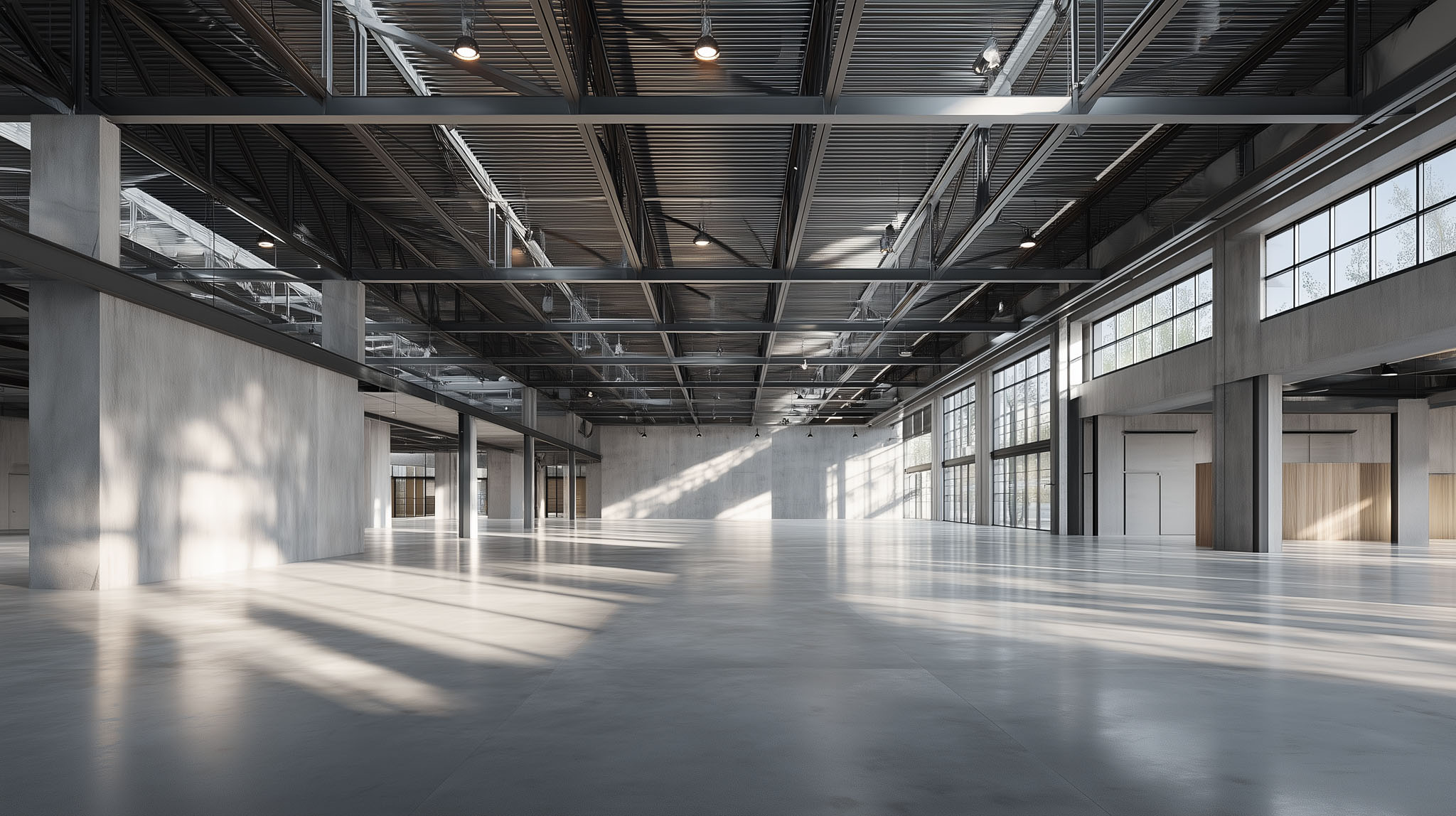
Each type of warehouse is designed to meet specific needs in product handling and storage. These are the main types of warehouses, their characteristics, and examples of businesses that could benefit from each:
| Warehouse Type | Characteristics | Benefits |
| Storage Warehouses | Designed for storing products over a long period, they feature shelving, racks, and inventory management systems. | Allows for efficient inventory management, space optimization, and easy access to stored products. |
| Cold Storage Warehouse | Designed for storing products that require temperature control, such as perishable foods and pharmaceuticals; they are equipped with refrigeration or freezing systems. | Ensures the freshness and safety of perishable products, complying with food safety regulations. |
| Distribution Center | Designed to manage the reception, temporary storage, and rapid distribution of products; they feature order management systems, picking and packing areas, and loading stations. | Improves efficiency in order processing and shipping, reducing delivery times and increasing customer satisfaction. |
| Production Warehouse | Designed to store materials and work-in-progress products used in manufacturing; they are equipped with raw material reception areas, product storage, and material handling equipment. | Facilitates the organization of production workflow, ensuring that necessary materials are available at the precise moment. |
Each type of warehouse is designed to meet specific storage and product handling needs. Choosing the right type of warehouse will depend on the particular needs of your business and the products you handle.
Regardless of the choice you make, having a warehouse could bring a multitude of benefits to your company. Let’s look at these benefits so you can weigh if the cost-benefit is worth it.
The Benefits of Having a Warehouse for Your Business
Having an adequate warehouse can bring multiple benefits to your business. Let’s analyze how renting or buying a warehouse could have a positive impact on your company’s efficiency and profitability.
- Reduces the risk of excess or shortage of inventory because they feature inventory management systems.
- By avoiding the need to rent storage space at each store, your company’s operating costs are reduced.
- Facilitates inventory management and ensures that products are available when required, improving customer satisfaction.
- Optimizes the flow of products from the supplier to the final customer, allowing for efficient management of reception, storage, and distribution.
- Improves order processing times, reducing distribution time and costs associated with shipping.
- Ensures that products comply with safety and quality regulations, avoiding long-term regulatory issues.
- Protects inventory from theft and damage, reducing losses and guaranteeing product integrity.
By choosing the type of warehouse that best suits your company’s needs, you can significantly improve your business’s operational efficiency and profitability. Now that we have reviewed what warehouses are, the different types, and the benefits of these commercial properties, let’s see if it is better to rent or buy your warehouse.
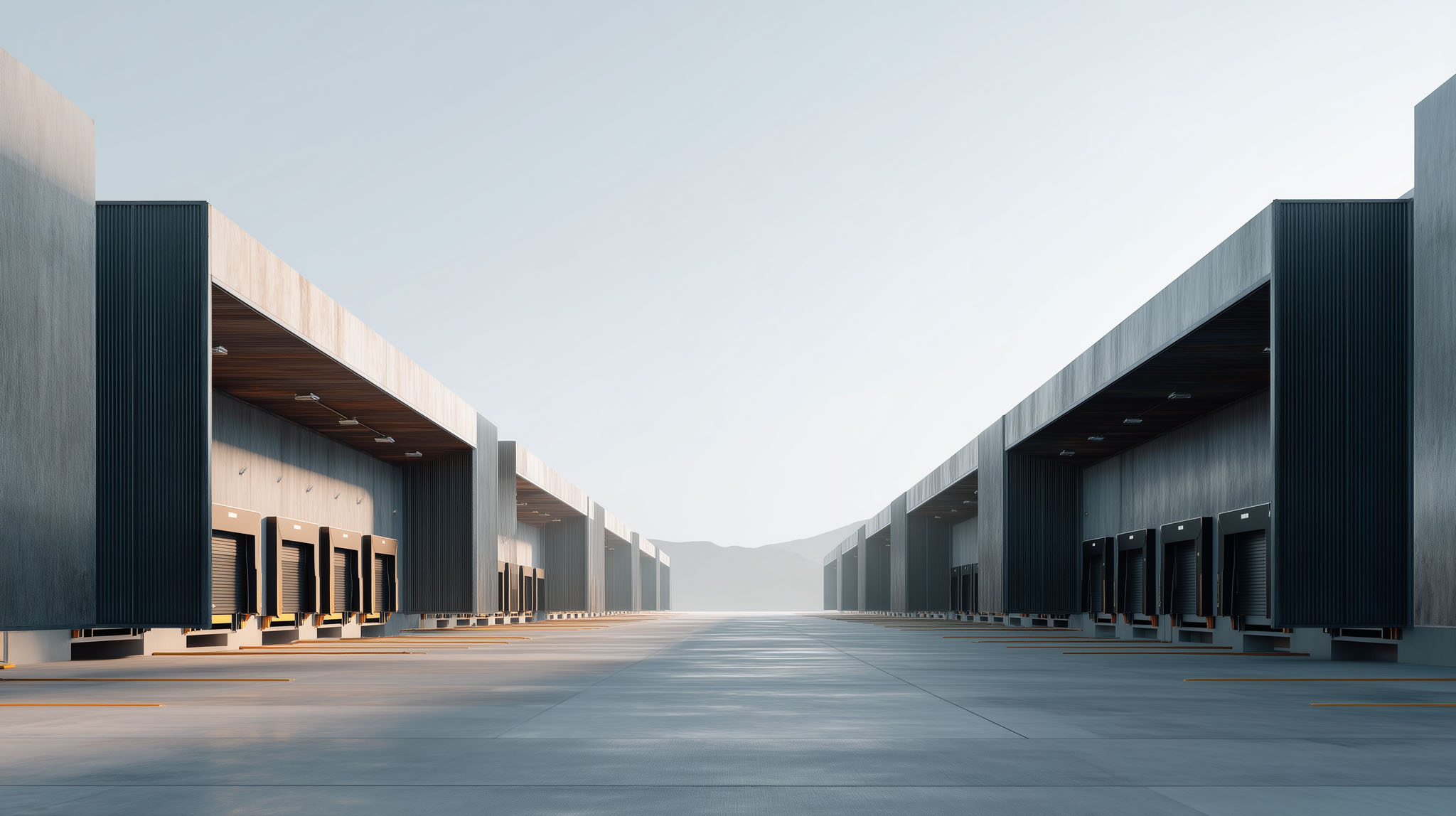
Renting vs. Buying a Warehouse: Advantages and Disadvantages
Deciding between renting or buying a warehouse is a strategic decision that can significantly affect a business’s operations and finances. For example, renting a warehouse offers a lower initial investment and greater adaptability to market changes.
On the other hand, buying a warehouse gives you total control over the property, allowing you to customize the space according to your business’s specific needs. Let’s take a closer look at the advantages and disadvantages of each option so you can make an informed decision.
Factors to Consider Before Renting a Warehouse
If you are considering leasing a commercial warehouse for your operations, there are several factors you should keep in mind. Let’s analyze both the advantages and disadvantages you should consider before signing your lease agreement.
The Advantages
One of the main advantages of renting a warehouse is that it offers greater flexibility compared to buying, allowing you to adjust to market changes and move your operations to another location if necessary.
On the other hand, they require a lower initial investment than buying a warehouse, making it an excellent option for startups or small businesses that need more cash flow for their operations. In fact, renting involves a much lower initial investment than buying.
Likewise, maintenance and repairs are usually the responsibility of the landlord, which saves you time and money.
The Disadvantages
Regarding the disadvantages, one of the most important is that it offers less control over the space, and you could face restrictions on modifying your warehouse. On the other hand, renting can be more expensive in the long run due to annual inflation increases.
In fact, lease agreements often include annual increase clauses, so the rent can go up over time. Consider your long-term finances if you are thinking about renting.
Finally, rent payments do not contribute to equity accumulation, meaning the money spent does not translate into assets for your company, unlike buying, which is considered adding an asset to your business.
Factors to Consider Before Buying a Warehouse
Having reviewed the factors to consider if you are looking to rent, let’s see how it compares to the advantages and disadvantages of buying your commercial warehouse so you can compare the points between both options.
The Advantages
One of the most important advantages of buying a commercial property is that it builds value over time, turning your warehouse into a valuable long-term asset for your company.
In turn, buying gives you 100% control, allowing you to customize the space to fit your brand and needs without the restrictions a landlord might impose.
Likewise, buying a warehouse fixes long-term ownership costs by not having to pay rent increases due to inflation. In fact, owning your warehouse can give you greater long-term stability and control.
The Disadvantages
On the other hand, buying a warehouse for your business requires a larger initial investment, which can be an obstacle for startups or expanding companies. In fact, buying requires a considerably higher initial investment than renting.
Additionally, you are responsible for all repairs and maintenance, which can increase your business’s operational and administrative costs. Finally, relocation will not be as simple if market conditions change.
By considering these factors and evaluating the advantages and disadvantages of each option, you can make an informed decision that aligns with your company’s needs. Now let’s look at the financial aspect of each option in more detail.
Analyzing the Financial Aspects: Buying or Renting?
Deciding between renting or buying a warehouse involves a careful evaluation of various financial factors. These are some expenses you should take into account to ensure your business’s financial stability during the acquisition of your warehouse.
| Rent | Buy |
| Requires a security deposit, which is usually equivalent to 1 or 2 months of rent. | Requires a significant down payment, which can range between 20% and 30% of the purchase price. |
| You must make the periodic monthly rent payment agreed upon in the lease agreement. | You must pay for maintenance and repairs, which typically represents 30% of the monthly mortgage cost. |
| You will have to pay for maintenance, cleaning, security, and utilities such as electricity, gas, and water. | You will have to pay for maintenance, cleaning, security, and utilities such as electricity, gas, and water. |
| You can deduct your warehouse rent as an operating expense on your tax return. | You must pay closing costs, which include notary fees and property transfer tax. |
| You can avoid tax complications and high taxes such as property transfer tax. | You must pay the mortgage monthly, including interest as agreed in the sales contract. |
| The property itself will not provide any asset appreciation for your company. | It can increase in value, resulting in a capital gain in the event of a sale. |
When deciding between renting or buying a warehouse, it is crucial to consider the above factors to make a decision aligned with your business’s financial and operational needs.
Once you have made your decision on whether to rent or buy, let’s go over some additional factors we recommend keeping in mind when searching for your property, regardless of whether you decide to rent or buy.
Factors to Evaluate to Find Your Ideal Warehouse
To help you make the best decision, let’s look at some other aspects to take into account, beyond the advantages or disadvantages that come with renting or buying. The other aspects we recommend considering are:
- Proximity to transportation routes, customers, and suppliers to facilitate the distribution of goods.
- The crime rate in the area and the presence of security measures to ensure your employees and goods are protected.
- The size of the warehouse to determine if there is sufficient space for your current and future operations.
- The condition of the infrastructure, facilities, and the need for repairs to avoid costly long-term problems.
- Compliance with local regulations and zoning to verify that it is operating legally.
Both options have their own advantages and disadvantages, so considering how each of these factors aligns with your business needs and goals is crucial to ensuring your business’s long-term success.
Checklist for Deciding Between Renting or Buying a Warehouse

To make things easier in your warehouse acquisition process, we are sharing this checklist as a summary so you can keep the key aspects in mind when choosing your warehouse.
| Key Factor | Considerations | Response |
| Location | Is it close to customers and suppliers? | |
| Is it an area with a low risk of crime? | ||
| How does it compare to the competition in the area? | ||
| Size | Is the space adequate for your current needs? | |
| Is there room for future growth? | ||
| Infrastructure | What is the general condition of the building? | |
| Is it equipped with the necessary facilities for your operation? | ||
| Costs | What is the necessary initial investment? | |
| What are the total monthly costs? | ||
| What tax benefits can you obtain? | ||
| Flexibility | What terms does the contract offer? | |
| Is it possible to modify the space according to your needs? | ||
| Growth Plans | How does the space align with your growth projections? | |
| Are there options to expand or relocate in the future? | ||
| Legality and Permits | Does the space comply with local regulations and use permits? | |
| Is the property title legal if you decide to buy? |
By taking these factors into account and comparing the benefits and disadvantages of each option you review, you will be ready to make the best decision not only for your current operations but also for your long-term growth goals.
Conclusion
Throughout this blog, we have addressed what a warehouse is, the different types available, and how each can benefit your company. We also compared the advantages and disadvantages of renting versus buying and provided practical tips for choosing the best option.
By evaluating all your options and considering these factors carefully, you can make the best decision for your goals and objectives. So, what are you waiting for? Start your warehouse search today with our customizable search tool to take your business to the next level.
Frequently Asked Questions
Renting offers flexibility and lower initial investment; buying builds equity and long-term stability. If your business is still growing or you prefer not to tie up capital, rent; if you are looking for a long-term investment and have financing, buy.
The price varies depending on location, size, clear height, and features such as loading docks, offices, and maneuvering yards. Industrial corridors with the highest demand, driven by nearshoring, have higher prices. Compare several options by area before deciding.
It can be profitable due to the high demand for storage and logistics, but it requires capital and a good location. We analyze this in depth in our guide on warehouses as an investment.
Clear height, loading docks, floor load capacity, electrical capacity, maneuvering yard, and proximity to highways and labor. A storage warehouse has different needs than a distribution center with loading docks.